How Much Do F1 Pit Crew Make?
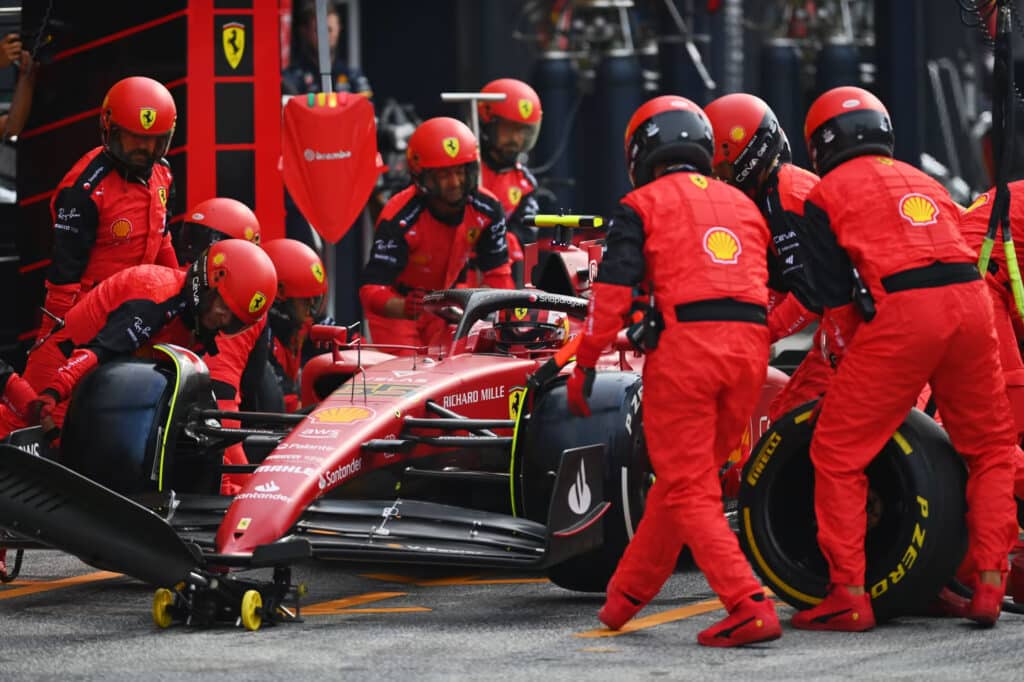
Formula 1 crews are an essential element of the sport, as they directly influence the cars’ performance on the track. Those lightning-fast pit stops couldn’t be possible without the crews’ dedication and quick reflexes.
Let me show all the F1 pit crew members salaries as of 2023:
| Role | $ Per Race | Annual Salary | Race Winning Bonus |
| Crew Chief | $10,000 | $1 million | $5,000 |
| Wheel Gun Operator | $5,000 | $350,000 | $2,500 |
| Tyre Carriers | $3,500 | $270,000 | $2,500 |
| Jack Men | $3,000 | $150,000 | $500 |
| Wing Men | $3,000 | $150,000 | $500 |
| Stabiliser | $2,500 | $90,000 | $250 |
| Lollipop Man | $1,500 | $70,000 | $250 |
| Fire Extinguisher Man | $500 | $30,000 | $250 |
Crew members not only get an annual salary but also bonuses for every race and every race won. This encourages them to perform at peak capacity all the time.
A team determines the pit crew’s salary based on every person’s role and responsibilities. Let’s go through them below and see what’s what!
Roles and Responsibilities of Pit Crew Members
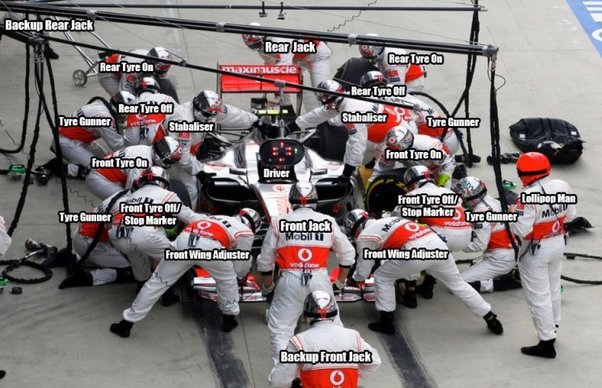
Every pit crew member plays their part during a pit stop, and the end-result is a seamless, flashy, and efficient show.
Here’s what every crew member’s responsibilities are:
1. Crew Chief
$ Per Race - $10,000
Annual Salary - $1 million
Race Winning Bonus - $5,000
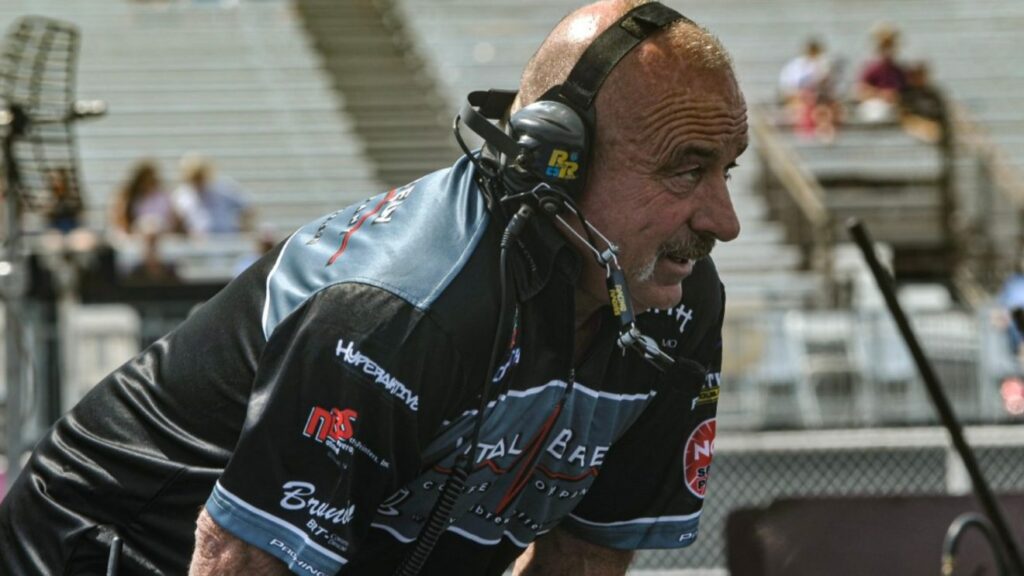
The pit crew chief is the core of every crew team. He selects all the other race engineers (pit crew members) and coordinates them accordingly during the Grand Prix weekend, practice sessions, and qualifying sessions.
The crew chief is also in charge of selecting which tyres should go on the car based on weather conditions, track condition, and so on.
He also decides on the team’s strategy regarding the car’s technical aspects, makes split judgments and decisions if something unexpected happens, and is the main decision-maker in the pit.
That’s why the pit crew chief is the highest paid person of a pit crew, making $1 million per year and earning $10,000 for every race + $5,000 for every race won.
2. Wheel Gun Operator
$ Per Race - $5,000
Annual Salary - $350,000
Race Winning Bonus - $2,500
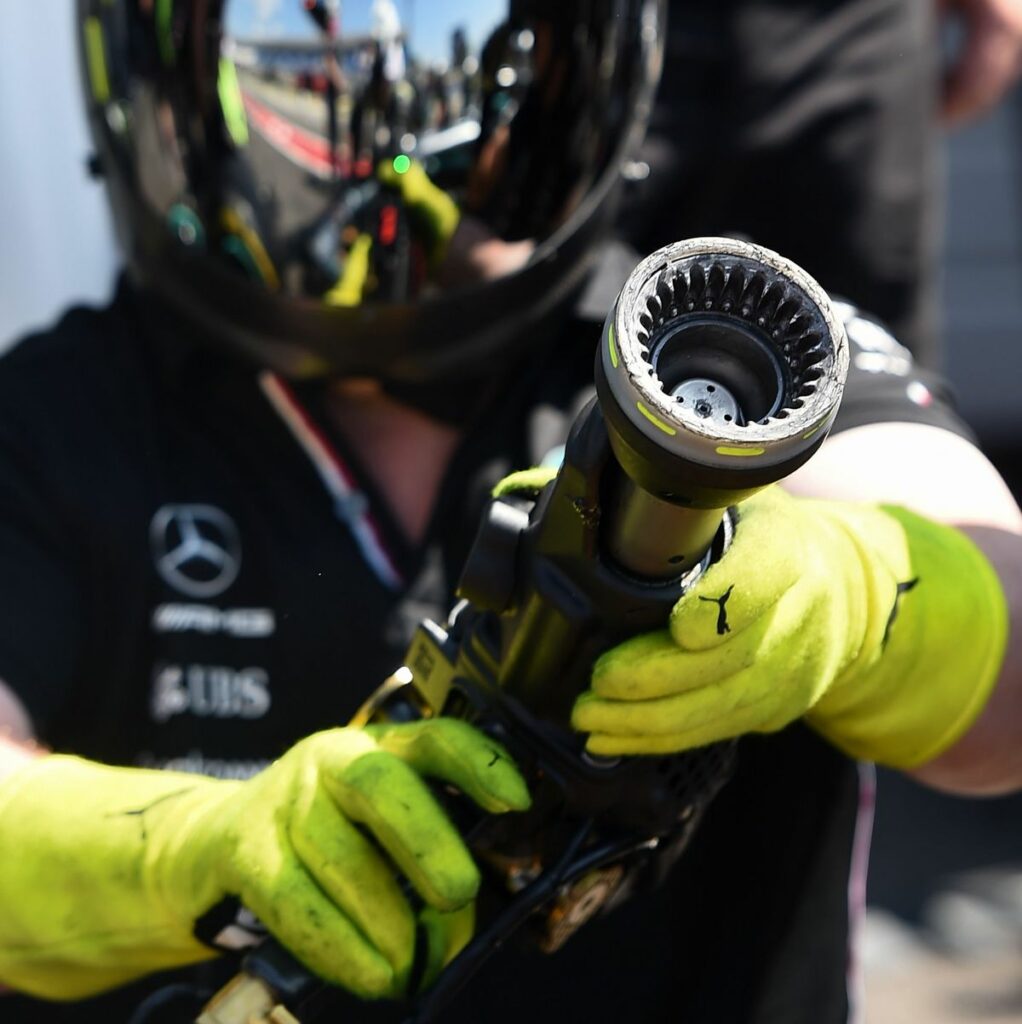
There are four wheel gun operators (tyre changers) in a pit crew team. Each member will change one of the four tyres when the car comes for a pit stop.
Changing the tyres fast enough while also ensuring it fits perfectly requires a lot of skill and speed. That’s why wheel gun operators are the second-best paid role in a pit crew.
A common misunderstanding is that wheel gun operators also replace the old tyres with the new ones. That’s not true. They only loosen and tighten the wheel nuts. Replacing the old tyres with new ones is a job for the tyre carriers!
3. Tyre Carriers
$ Per Race - $3,500
Annual Salary - $270,000
Race Winning Bonus - $2,500
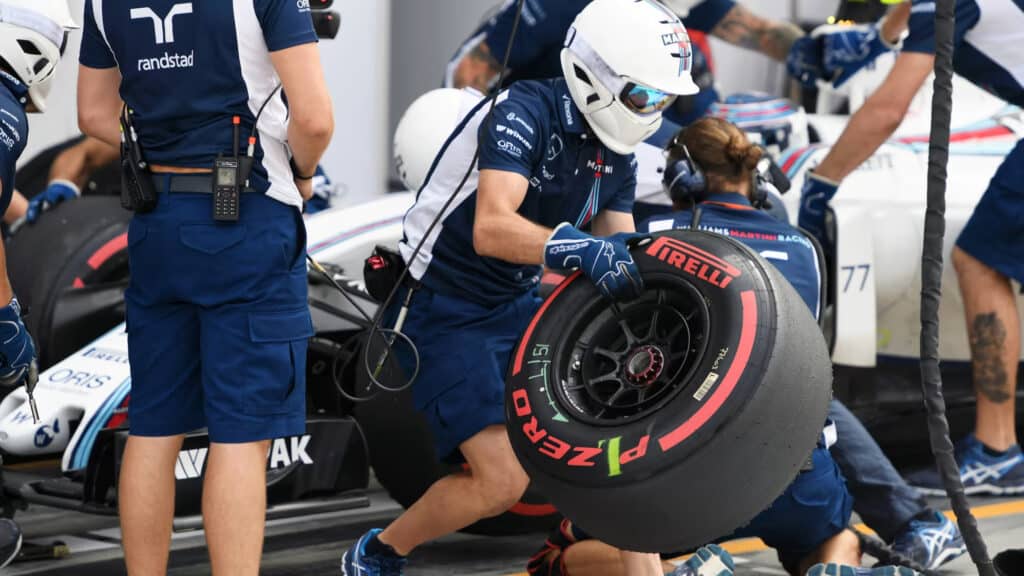
There are eight tyre carriers, two for each wheel. One takes out the old wheel after the wheel gun operator loosens the wheel nut, and the other one puts on the new wheel. Then, the wheel gun operator tightens the wheel nut and it’s all done.
This is a 1-2-second job across both roles – wheel gun operators and tyre carriers – that happens seamlessly.
Tyre carriers have to move quickly to get the wheel from and to the vehicle in the shortest time possible.
Due to this skill ceiling, they’re the third-best paid crew role in Formula 1.
4. Jackmen
$ Per Race - $3,000
Annual Salary - $150,000
Race Winning Bonus - $500
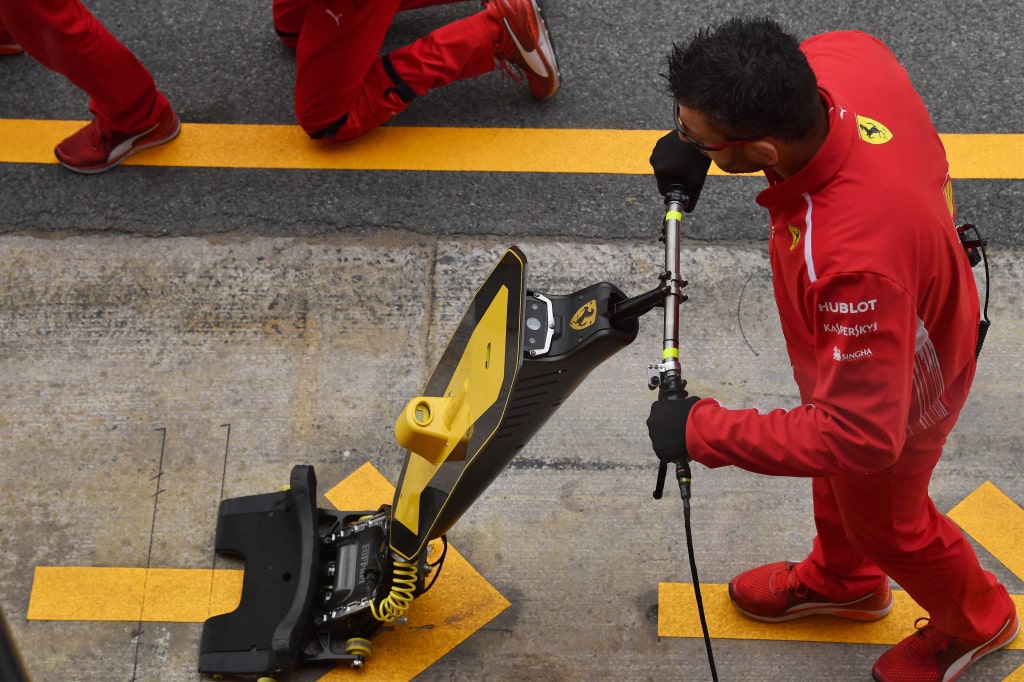
There are two jackmen in every pit crew. One lifts the car from the front and the other one lifts the car from the back.
Once the pit stop procedure is over, the jackmen will bring the car back down and get out of the way quickly so the driver can leave.
Jackmen need to be very fit to lift the car quickly and bring it back down in one seamless move without sacrificing precious time and under intense pressure.
The specialised jacks they use aren’t physically demanding, though, as it only takes the press of a button to lift the car and another to bring it back down.
5. Wing Men
$ Per Race - $3,000
Annual Salary - $150,000
Race Winning Bonus - $500
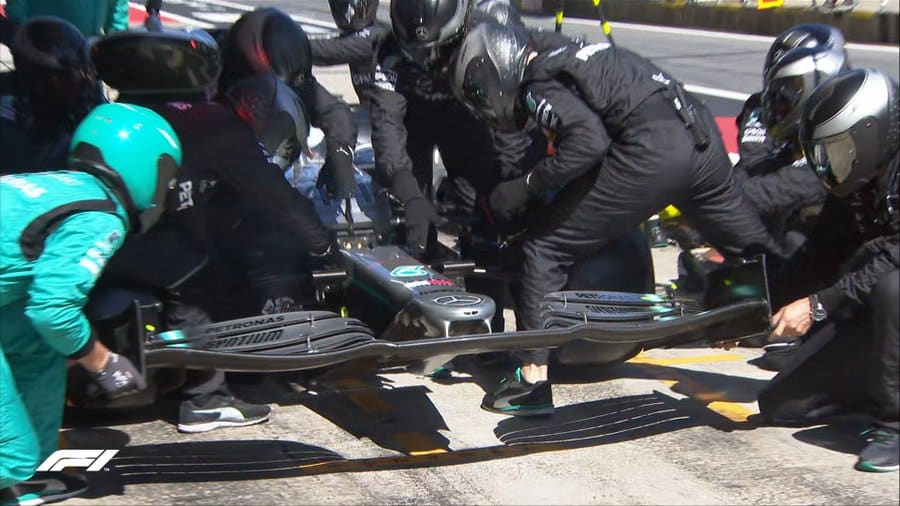
There are two wing men that will adjust the front wing angle during every pit stop. Depending on the track conditions, tyre wear, weather, and driving style, the wing may require readjusting.
That’s because the front wing shapes the car’s entire aerodynamics since it’s the first element that strikes the air as the car drives forward.
The wing men may also change the wing entirely if required. This is a crucial job, and wing men are paid handsomely.
6. Stabiliser
$ Per Race - $2,500
Annual Salary - $90,000
Race Winning Bonus - $250
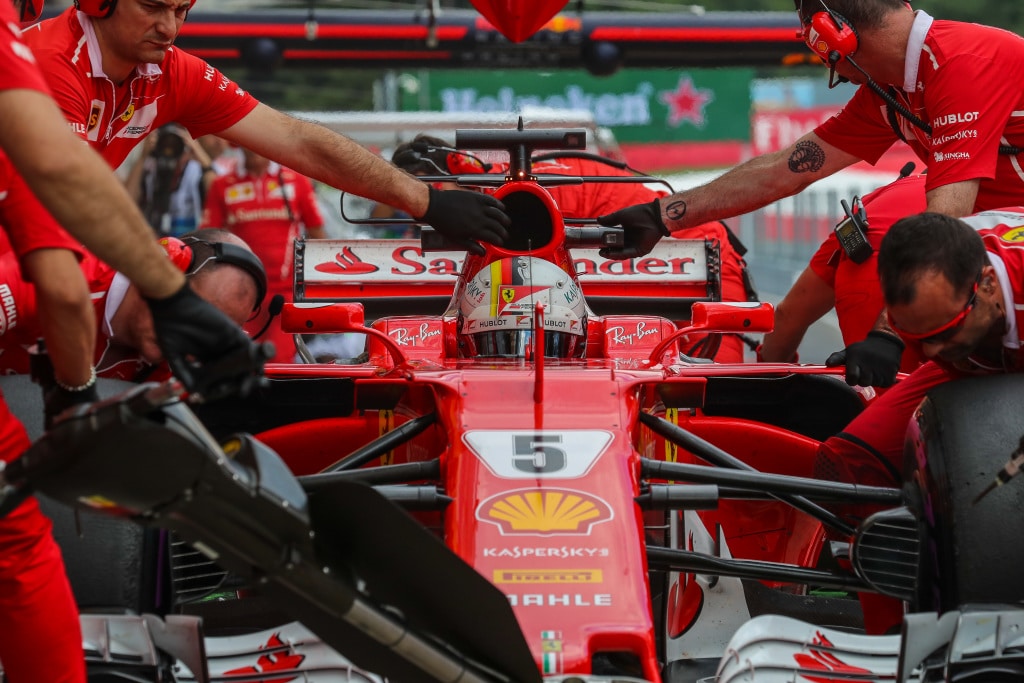
There are two stabilizer crew members whose job is to keep the car steady on both sides when the jackmen lift it up.
When the jackmen lift the car up, this will balance the car sideways, and the two pit crew members stabilise the car during this process.
They may also clean the driver visors, radiators, and mirrors if required. Stabilisers are incredibly important during the pit stop, so their pay is appropriately satisfying.
7. Lollipop Man
$ Per Race - $1,500
Annual Salary - $70,000
Race Winning Bonus - $250
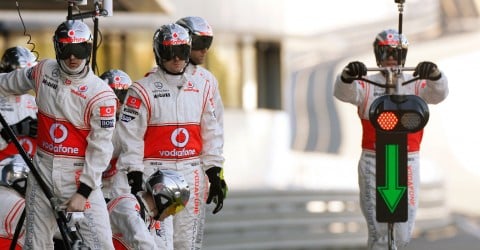
There’s only one lollipop man in an F1 pit crew and no, they don’t serve lollipops to the driver. Their job is to give the green signal once the pit stop procedure ends, signalling that the car can be released.
This means that, once the lollipop man signals green, the car is ready to rejoin the race. Before automatic lights were introduced, the lollipop man would wave a big sign to signal to the driver that they can leave the pits.
Now, this role has changed somewhat. It still exists but the lollipop man will change the pit stop gantry system to green to release the driver instead of waving a sign.
There’s also a secondary crew member who’s watching the pit lane and can stop the light from going green if they spot an issue.
Their only job is to watch out for traffic and make sure the team’s car doesn’t impede another car when exiting the pit.
8. Fire Extinguisher Man
$ Per Race - $500
Annual Salary - $30,000
Race Winning Bonus - $250
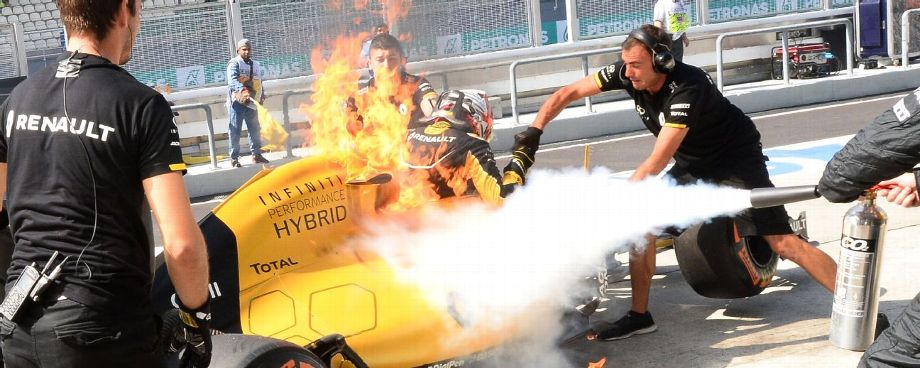
There’s one pit crew member on standby during every pit stop, and that’s the fire extinguisher man. Their only job is to put out any unexpected fire if an incident occurs.
Since they aren’t doing anything else during the pit stop procedure, fire extinguisher men aren’t paid as much compared to other busier crew members.
However, it’s a crucial role that can even save the life of a driver in case a fire occurs unexpectedly.
Interesting fact – before 2010, every crew team had a refueling person that would refuel the car. However, the FIA introduced new regulations that banned mid-race refuelling, so the refuelling role disappeared.
Refueller members used to earn $350,000 annually, $5,000 per race, and $2,5000 per race won.
Salary Components and Variation Among Different Teams
Pit crew salaries typically includes three components:
- Annual salary, which is paid regardless of performance, and is influenced by the team’s budget and the member’s role and experience
- Race bonus, which is paid for every race they take part in, regardless of the outcome
- Race win bonus, which is only paid if the team wins a race
However, this may be different depending on the team. Some teams may opt for additional performance-based bonuses like podium finishes, winning championship, and more.
For instance, they may offer bonuses based on how fast the pit stop procedure is or even if it’s the fastest pit stop during a race.
F1 pit crew members can also negotiate their salaries depending on several factors, such as seniority, specialised skills, consistent performance, and training or certifications.
How Can You Become an F1 Pit Crew Member?
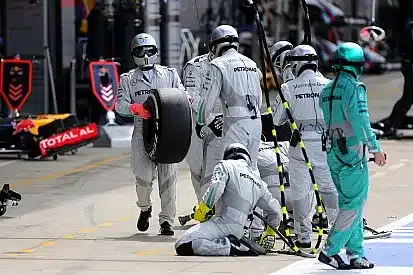
Anyone can become a pit crew member as long as they get a certification from a pit crew training course. Moreover, most, if not all pit crew members are either mechanics, truck drivers, or they have other automotive-related jobs.
After all, being a pit crew member is not a full-time job. Only the crew chief has a full-time job with responsibilities to fulfil all-year long.
Every other crew member is only there when needed, during qualifying sessions, practice sessions, and races.
The crew chief has many long-term responsibilities other than overseeing the pit stop procedures during races.
They create the Formula One race strategies, build a close relationship with the driver to understand their racing style and preferences, and optimise race performance through continuous development of tactics.
Fastest Pit Stop in F1 History – 1.80 Seconds
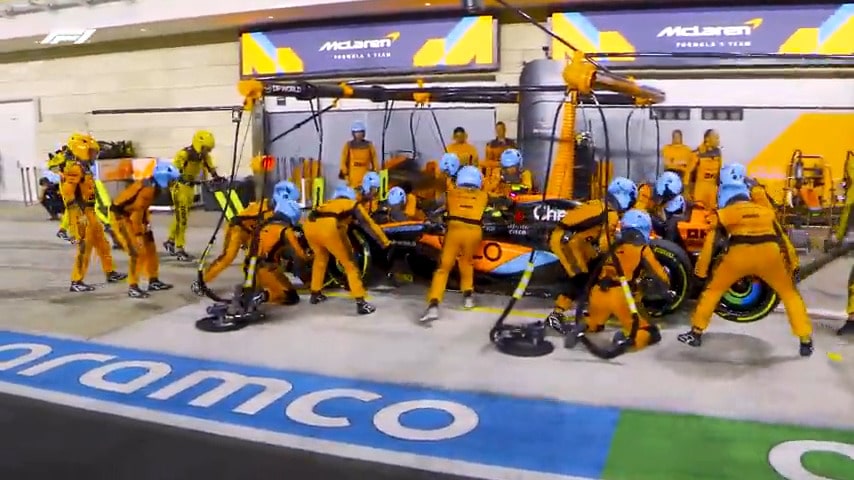
The fastest pit stop in history belongs to McLaren Racing Limited. It took place during the 27th lap at the 2023 Qatar Grand Prix.
The driver coming for a pit stop was Lando Norris, and the entire pit stop took 1.80 seconds. You can watch the video here.
During the video, you can truly see the seamless cooperation between all crew members. You can barely process what’s happening before it’s over – that’s the result of hundreds of hours of practice and dedication.
The previous fastest pit stop belonged to Red Bull Racing, who finished their pit stop in 1.82 seconds during the 2019 Brazilian Grand Prix.
In a sport where 0.02 seconds can literally mean the difference between 1st and 2nd place, this achievement was one for the ages.
It becomes clear that pit crews are constantly looking to optimise pit stops, always trying to move faster and shave off a few extra milliseconds.
Slowest Pit Stop in F1 History – 43 Hours and 15 Minutes
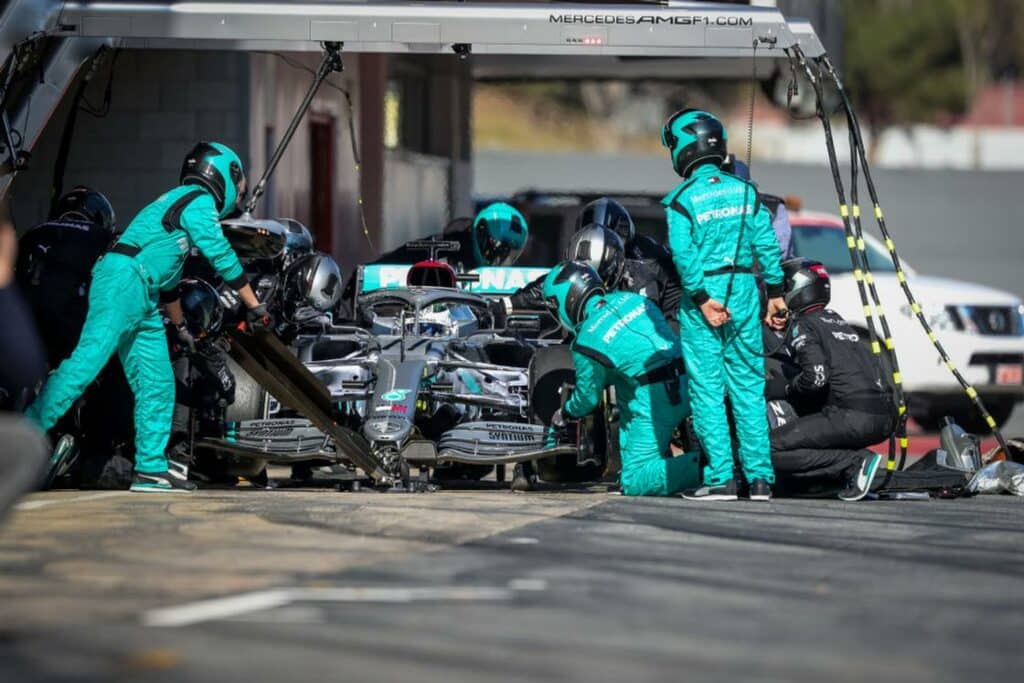
Valtteri Bottas came for a pit stop in the Mercedes pit box and a wheel nut got stuck in the right front wheel. The wheel gun operator could not unscrew it, and so the team had to retire from the race.
It took 43 hours and 15 minutes for the team to finally unscrew the wheel nut using special equipment at their factory.
Apparently, this was caused by Bottas missing his ideal position in the pit box. The mechanics had to adjust their positions, and the gun operator could not align the gun socket with the wheel nut correctly.
This led to a deterioration of the wheel nut, and it could not be removed on the spot, so Mercedes had to withdraw from the race.
What’s more, Bottas would have likely won the race had it not been for this unexpected incident.
Evolution of Pit Stop Technology
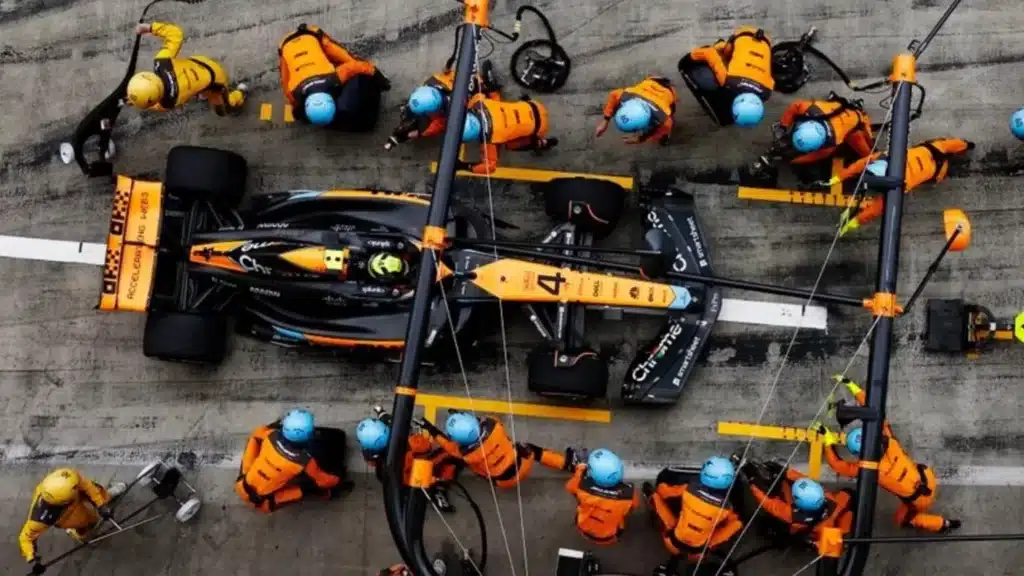
Over the years, pit stops have become faster and more efficient. Drivers are spending less time in their pit box and more time on the track, optimising their times during the race weekend.
This was due in no small part to the changing nature of pit stop technology. Here are some improvements made over time:
- The introduction of pneumatic tools that use compressed air, which allows for ultra-fast tyre changes with more precision
- The development of multiple tyre compounds has consistently reduced the frequency of pit stops by increasing the durability of the tyres on prolonged use
- Advanced real-time telemetry data allows the pit crew staff to assess the car’s performance and tyre wear, and to make optimal decisions on the fly
- Advanced simulation tools allow for the creation and optimization of more effective it stop strategies
- Helmet-mounted communication systems that allow for real-time information exchanges between pit crew members and the driver
Cutting-edge technology advancements have always defined Formula 1, and that is also the case with pit stops.
Conclusion
To summarise, there are around 22 pit crew members in Formula 1 but the FIA doesn’t limit the number of pit crew members. Technically, a team can have any number of pit crew members.
However, after years of strategy optimization, most teams have settled on 22-23 crew members. They’re enough to perform pit stops effectively and not get in each other’s way.
Typically, there are 8 pit crew roles in every F1 team but all teams also have reserve members that enter the fray if something happens with the regular members.
For instance, every team has two additional jackmen who will sit behind the regular jackmen, prepared to step in at any time, in the case one of the jacks malfunctions.
All in all, all Formula 1 pit crews are very well compensated, with bonuses for the team’s performance that incentivize optimal performance during races.