What Is an Undercut in F1?
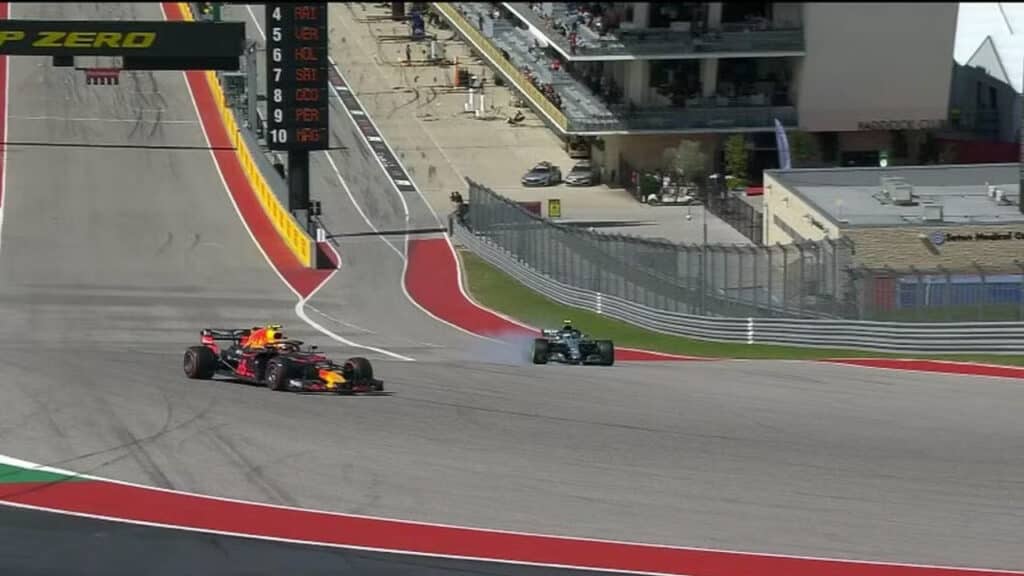
The undercut is one of the many strategies used in Formula 1 to gain an advantage over the competition, the other one being overcutting. In short, undercutting is when a driver takes a pit stop earlier than the opponents in front and uses the fresher tyres to gain time and track position over them.
It’s a very common tactic used by all teams, and it’s especially useful when overtaking doesn’t work.
The timing of the undercut needs to be exact, though, as the team doing the undercutting needs to be relatively sure that the opponents ahead will also pit soon. That’s the only way they’ll gain a bigger lead.
Let’s explore the undercut and see how F1 teams execute it!
How Does the Undercut Work?
In order to understand the principles behind undercutting, I’ll explain two of the most essential concepts of undercutting first:
- Clean air vs. dirty air
In Formula 1, when two cars are driving really close to one another, the one in the back is driving through “dirty air” while the one in front has the advantage of “clean air”.
This is tied to aerodynamics. The car in front has optimal aerodynamic performance because the airflow in front of it is not hampered by anything else (like another car).
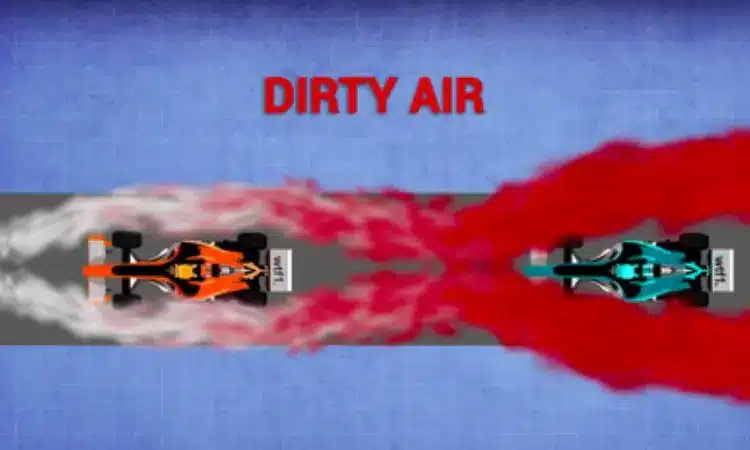
The car behind has sub-optimal aerodynamic performance because the airflow in front of it is disturbed by the car in front. The airflow will be low pressure, which provides less aerodynamic performance.
- Fresh tyres vs. worn tyres
This one is easy. Formula 1 cars will drive faster and will have better handling on fresh/new tyres vs. worn out tyres.
As they race around the track, the tyre life will gradually decrease, affecting the overall speed and performance.
Undercutting relies on these two concepts to give the driver in the back the advantage of clean air and fresh tires.
The Undercut
To illustrate the undercut, I’ll use the 2019 Singapore Grand Prix, when Sebastian Vettel undercut both Charles Leclerc and Lewis Hamilton and won the race. This was also Sebastian Vettel’s last win in Formula 1.
During the race, Leclerc (Vettel’s teammate) was in first place, followed by Hamilton in second place, Vettel in third place, and Verstappen in fourth place.
Ferrari got wind that Red Bull would pit Verstappen the next lap, so they felt that Vettel’s position would be at risk. They decided to pit Vettel on the 19th lap to safeguard his position, and pitted Leclerc one lap later.
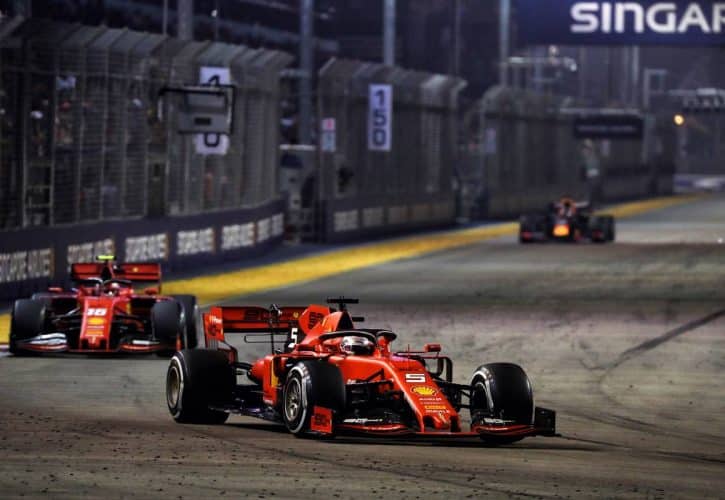
Ferrari expected Leclerc to come out ahead of Vettel from his pit stop but Vettel drove like never before and undercut his teammate by a whole 3.9 seconds. When Leclerc was coming for his pit stop, Vettel had already secured first place and eventually won the race.
Ferrari later said that they’d underestimated the undercut as well as Vettel’s perfect driving that got him the 3.9-second undercut over Leclerc.
When used strategically, and with a bit of luck, an undercut can help a driver leapfrog over several positions with the help of clean air, fresh tyres, and solid driving.
In this case, Vettel undercut both Hamilton and Leclerc in one fell swoop, jumping from 3rd to pole position, gaining almost 4 seconds over Leclerc.
Undercut Execution – Essential Factors to Consider
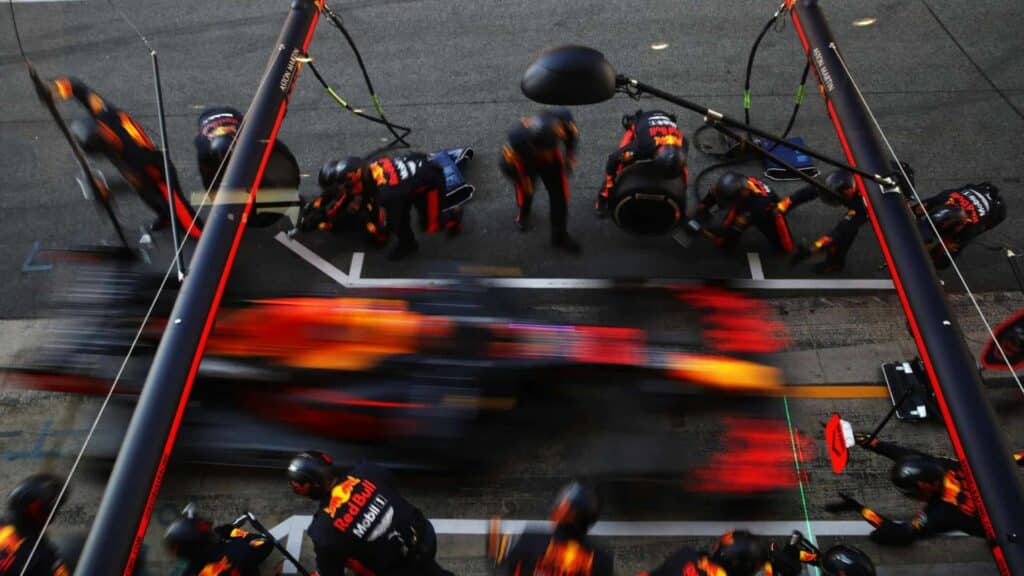
When performing an undercut manoeuvre, F1 teams will have to consider several key factors, including:
- Tyre degradation
- Lap time delta
- Clean air advantage
- Traffic on the track
- Pit lane efficiency
- Strategic positioning
- Rival strategies
- Race conditions
- Communication
- Team collaboration
- Risk vs. reward
Such a simple move, when seen on the track, is actually the result of careful consideration, analyses, simulations, and seamless coordination.
Let’s go over each factor and see how they pan out!
1. Tyre Degradation
Among the first considerations for an undercut is tyre degradation. Teams will assess the condition of the current set of tyres and estimate if getting fresh tires earlier is advantageous.
Tyre degradation relies on several other factors, including track condition, weather, tyre compound, and more.
2. Lap Time Delta
The lap time delta is the time difference between drivers’ lap times. Teams will consider this when identifying the optimal window to perform an undercut, so that they get a boost in their time delta vs. the competition.
After all, this is what matters most – if the undercut manoeuvre gains you any track position or not.
3. Clean Air Advantage
Teams will also consider the increased performance due to the clean air following an undercut manoeuvre during the simulations.
Without the aerodynamic disturbance ahead, a driver will typically obtain faster lap times, so undercutting should be advantageous by default by this rationale alone.
But that’s not always true. The estimated traffic on the track may slow you down after an undercut, negating the clean air advantage.
4. Traffic on Track
Before committing to an undercut, the team will determine the traffic on the track before and after the driver pits.
It would be disastrous for a driver to pit only to come back out and be stuck behind slower cars and throw away the undercutting advantage.
However, this doesn’t usually happen because the teams use accurate simulations that can predict traffic and find a good timing for the undercut.
5. Pit Stop Efficiency
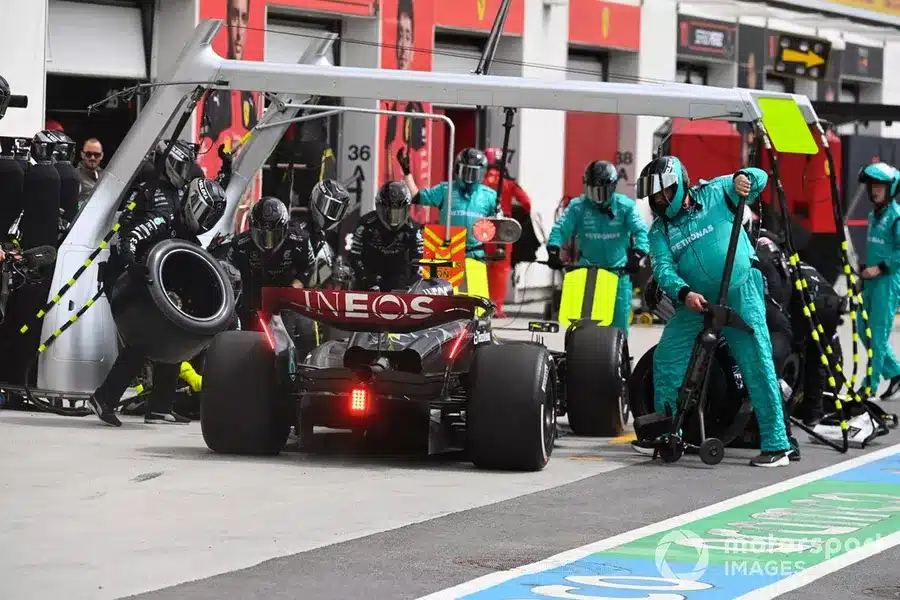
The speed of the pit stops is a key element in undercutting strategies. To capitalise maximally on this race strategy, the pit crew has to perform flawlessly and release the car super quickly.
The efficiency, cooperation, and coordination of the pit crew, as well as the drivers’ entry into the pit box are essential for this to work.
6. Track Position
The driver’s position on the track is also important when deciding to undercut. If they’re in first place, they may choose to overcut, go for a few laps more and stay on the track longer to pull off ahead and increase their lead before pitting.
An undercut strategy typically becomes more attractive the further behind in track positions a driver is. But that’s only true if the undercutting driver can make up for the time lost pitting and then some.
7. Rival Pit Stop Strategy
F1 teams are always keeping a close watch on their competitors, analysing, predicting, and reacting to their strategies.
If you can anticipate that a rival team will take a pit stop in one or two laps and you perform an undercutting as a response, you can effectively maintain or grow your advantage, or even win the race.
8. Tyre Compound Selection
Undercutting tactics often include changing the car’s tyres to another compound. Depending on the track surface and the compound characteristics, an undercut may offer a sizable advantage if timed correctly.
For instance, if a driver undercuts during the final phase of a race, the team may go for a softer compound because of the extra speed, to try and gain as much of an advantage as possible.
9. Race Conditions
The weather conditions and track temperature are important factors to consider for an undercut manoeuvre because they affect the car’s performance directly.
The tyre performance and the overall race dynamics can change significantly given different race conditions.
10. Communication
Communication is key when discussing an undercutting manoeuvre. The team must obtain real-time information from the driver regarding tyre wear, track conditions, and competition.
The driver and team will discuss the merits of the manoeuvre back and forth, and this requires efficient communication. The pit stop window doesn’t stay open for long.
11. Team Collaboration
Collaboration between teammates is also an important factor when undercutting, especially if both are using a similar strategy simultaneously.
The team’s overall performance is what matters, so coordination between the two drivers is key. One driver makes an early pit stop, while his teammate in front could attempt to slow down the traffic, allowing the undercutting driver to make a better comeback.
12. Risk vs. Reward
Lastly, the team must weigh the risk vs. reward of performing an undercut manoeuvre at any given time. They must put the entire race as well as the championship in perspective.
Their championship points gained so far, Grands Prix won so far, and other factors may be a part of this equation.
If the risks are too high and the consequences too devastating, a team may choose to avoid undercutting and play it safe instead.
Conclusion
Undercut and overcut manoeuvres are two of the more popular race strategies in Formula 1, with the former being the most used on most tracks.
This seemingly simple move relies on several complex factors to work but if pulled successfully, the undercut is an extremely effective manoeuvre that can easily win races.
If it doesn’t pan out as intended, there may be more to lose than gain but undercutting strategies have become increasingly better over the years.