What Is the Halo in F1?
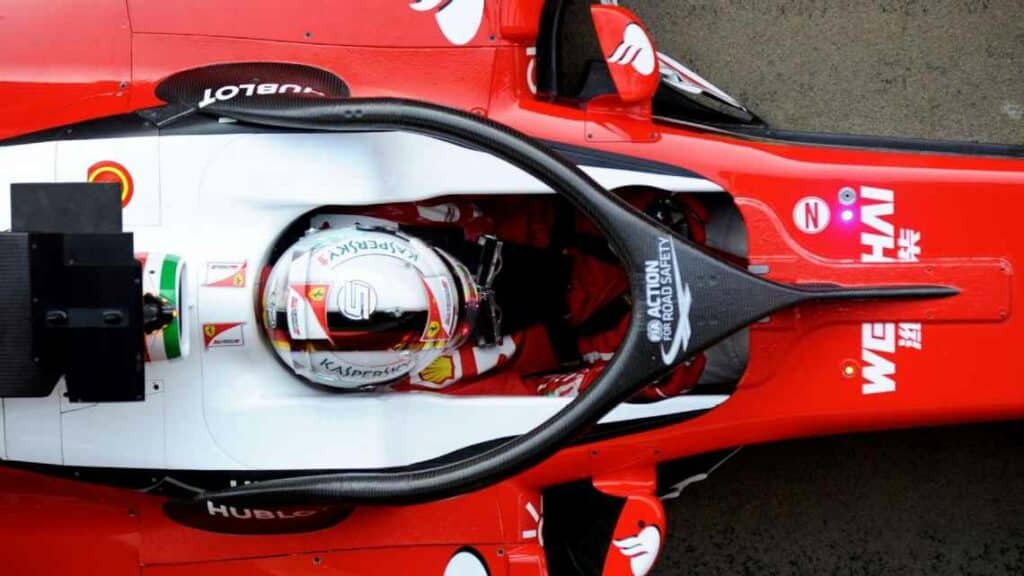
Formula 1 wasn’t always the uneventful sport we know today, from a casualty point of view. For most of its history, Formula 1 was a dangerous and even deadly sport, with many drivers perishing in freak accidents.
Protection mechanisms like the Halo changed that, though. First tested during the 2016 and 2017 seasons, the Halo was introduced fully in 2018, and several drivers credit it with saving their lives.
In this article, I’ll go over what the Halo is, why it was introduced to F1, how it works, and the many lives it has saved over the years!
Construction and Protection Benefits
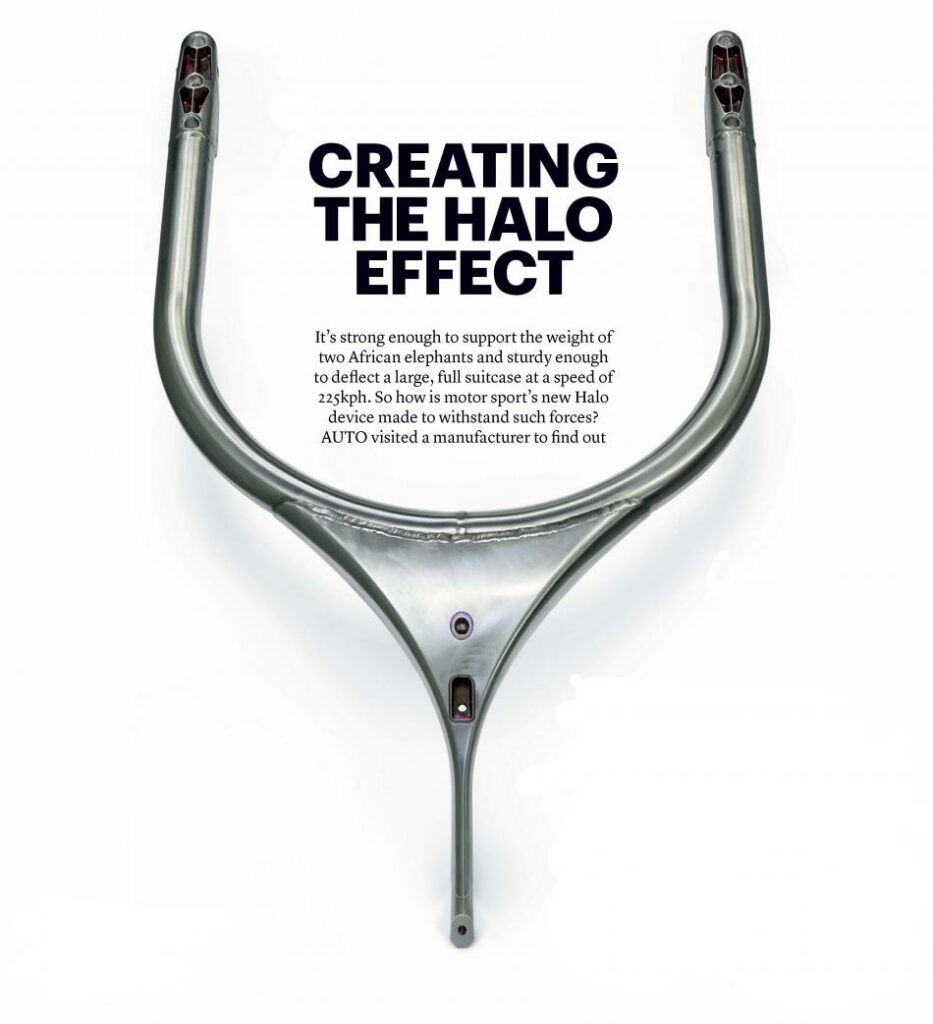
The Halo comprises of three elements:
- The front section
- The tube that goes around the cockpit
- The rear mounts
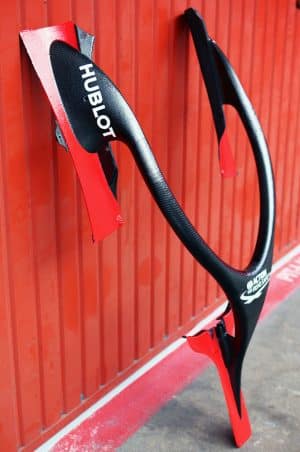
The construction is made from a single piece of titanium that is then covered in carbon fibre and placed above the car’s cockpit.
After multiple tests, the FIA found that it can significantly improve driver safety and decrease the risk of serious injury and even death in cases of accidents.
The FIA even performed several simulations of past accidents and concluded that the Halo would have prevented the driver’s helmet from coming into contact with the barrier or other debris.
One simulation showed that the Halo could also deflect large flying debris and offer significantly increased protection against small debris.
According to Mercedes, the Halo structures “are capable of holding the weight of one of London’s iconic double decker buses – that’s the equivalent of 12 tonnes balancing on a 7kg [9kg in reality] metal frame.”
So, the Halo is strong. Very strong!
Why Does the F1 Halo Use Titanium?
Titanium has the highest tensile strength and density out of all metals, a whopping 63,000 PSI.
Its strength-to-weight ratio is also the highest out of all known metals, making it ideal for lightweight applications without sacrificing strength.
And the Halo on a Formula 1 car is made from a Grade 5 titanium structure. That particular type of titanium goes into the manufacture of aerospace engineering, so it’s incredibly stiff and strong.
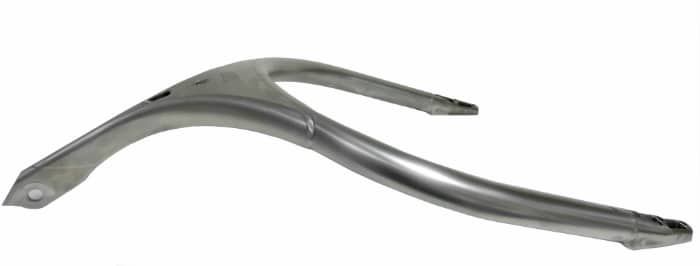
It’s so strong that it can support the weight of two African elephants (around 12 tons) and durable enough to deflect a large, fully-loaded suitcase flying at 140 mph (225 km/h).
Regarding weight, titanium is approximately 45% lighter than steel when comparing their strength-to-weight ratio.
Potential Downsides of the Halo System
When the FIA initially introduced the Halo system, it became obvious that teams would have a major headache on their hands. Three problems - the high costs of the Halo, the lower aerodynamism, and the extra weight.
Let’s see why these two things were problematic:
1. High Costs
A single Halo system costs around 13,000 – 24,000 EUR to purchase. Since every F1 team has two drivers, they would have to spend between 26,000 to 48,000 EUR for the Halo alone.
They would also have to perform tests and simulations to conclude that the Halo was qualitative, safe to use, and that it did not impede the driver’s performance.
Unfortunately, F1 teams can’t bypass this problem because the Halo system is manufactured by three FIA-approved manufacturers according to precise specifications.
2. Lower Aerodynamism
According to the Silver Arrows’ technical chief James Allison, the round tube of the Halo is particularly bad aerodynamically.
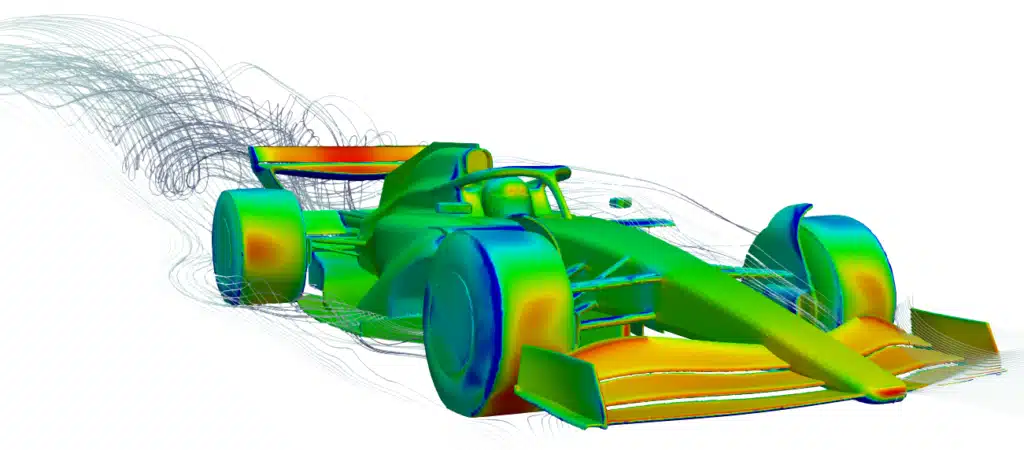
So, the FIA allows teams to modify the Halo by fitting aerodynamic fairing around it. This way, every Halo is individual for every team without sacrificing driver safety or performance.
3. Extra Weight
The Halo weighs around 20lb (9kg), and the FIA regulations require that all cars have a minimum weight of 1759.29 pounds (798 kg) as of 2022.
So, all teams had to find a way to adjust all the other components to implement the 9 kg-heavy Halo without losing much performance and aerodynamism.
Why the “minimum” weight system instead of a “maximum” weight system, you ask? Because it’s a safety measure. Doing it the other way would mean that teams are encouraged to sacrifice the rigidity of some components to make the cars lighter and thus faster.
Why Was the Halo System Introduced?
After the deadly crash of Jules Bianchi in 2014, the motorsport world realised that more cockpit protection was needed to safeguard drivers’ lives during risky crashes.
And so, the FIA proposed two systems, with Red Bull proposing another one: the Halo, the Aeroscreen, and the Shield.
Here’s what each system involved:
1. The Halo Device
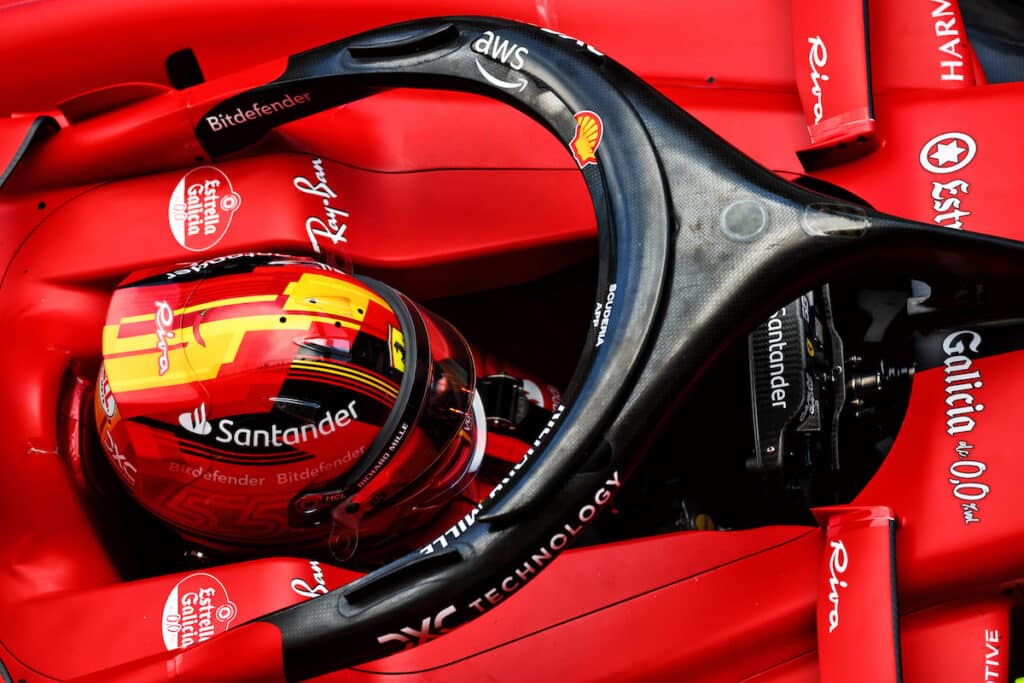
Proposed by the FIA, the Halo is a three-pronged tubular bar made of titanium that surrounds the driver’s head on all sides. The entire thing weighs around 20lb (9kg) in 2017, and it’s meant to protect the driver’s head in the following situations:
- Collision with another vehicle
- Collision with the environment (barriers)
- Collision with debris
Initially, the system wasn’t received with much enthusiasm from drivers and teams. Niki Lauda famously said that the system destroys the “essence of racing cars”, while Max Verstappen claimed that it “abused the DNA” of F1, a sport that was “less dangerous than riding a bicycle in a city.”
2. Aeroscreen
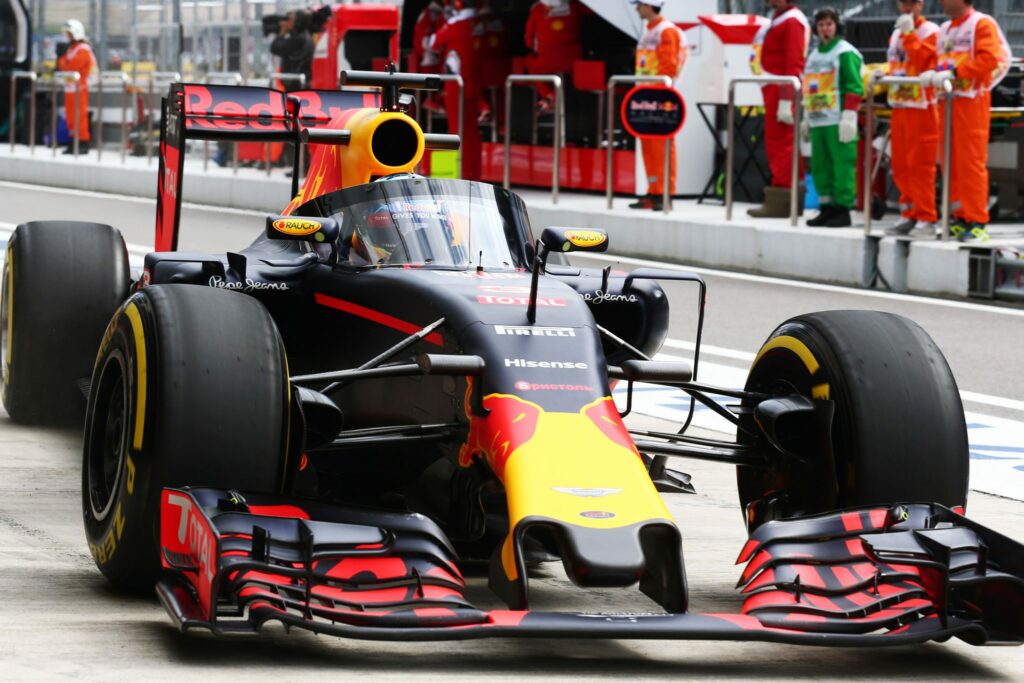
Red Bull Advanced Technologies developed the “aeroscreen” as a response to the Halo. It was a transparent screen similar to a windshield, and would be placed in front of the driver.
Neither the FIA nor other teams and drivers were very interested in the idea, so it was eventually scrapped.
3. The Shield
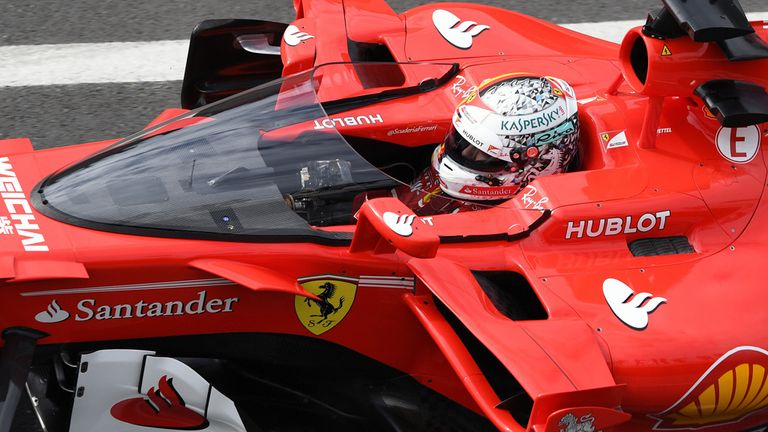
The FIA came up with an alternative to the Halo after the drivers were vehemently opposed to the former.
The shield was a transparent polyvinyl chloride screen and it was supposed to offer increased protection. Sebastian Vettel was the only driver who drove an F1 car with the shield installed, and he said that he had distorted and blurred vision because of it.
Eventually, the FIA returned to the original Halo concept and made it mandatory in 2018, as it was concluded that it was the only device of the three that did not impede the drivers’ performance as much.
Proven Track Record of the Halo
Despite the initial denial of the Halo, it has proven its usefulness time and time again over the years. Here are some of the cases where the Halo either prevented an injury or saved a driver’s life:
1. Charles Leclerc & Fernando Alonso Crash in 2018
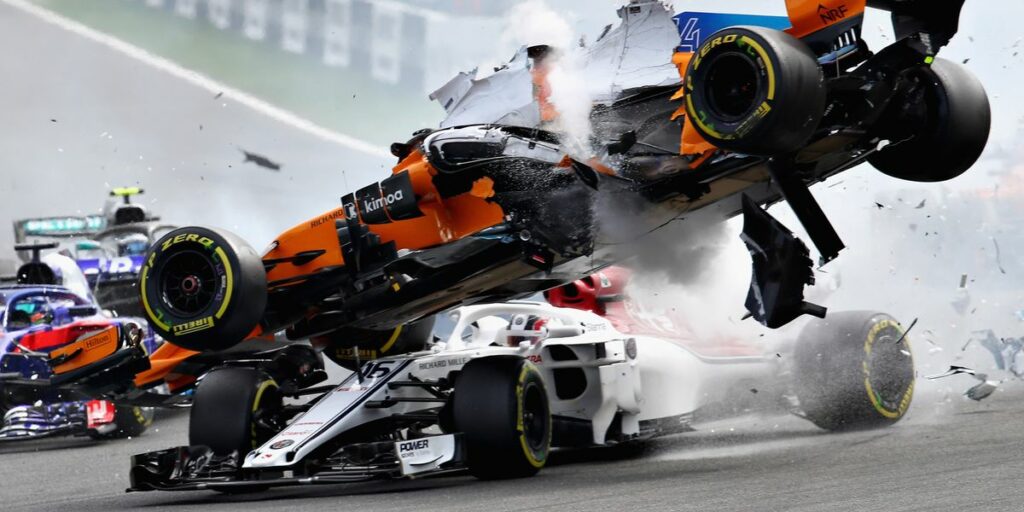
At the Belgian Grand Prix in 2018, Charles Leclerc and Fernando Alonso got into a crash after Alonso’s car was sent airborne and hit Leclerc’s car as it fell down.
Leclerc’s Halo was significantly damaged during the impact, and he claimed that the Halos may have saved his life that day.
If the cars had no Halos installed, Leclerc would have likely been severely injured during the crash.
F1 sporting director Charlie Whiting later said that “It would be a little bit speculative but you can see that it doesn’t take much imagination to think that the tyre marks could have actually been on Charles’ head. It would be a bit of a miracle if they weren’t, had the halo not been there.”
Even Mercedes team principal Toto Wolff, who had staunchly criticised the Halo, said that the system was “worth it” even though it had “terrible aesthetics.”
2. Romain Grosjean Crash in 2020
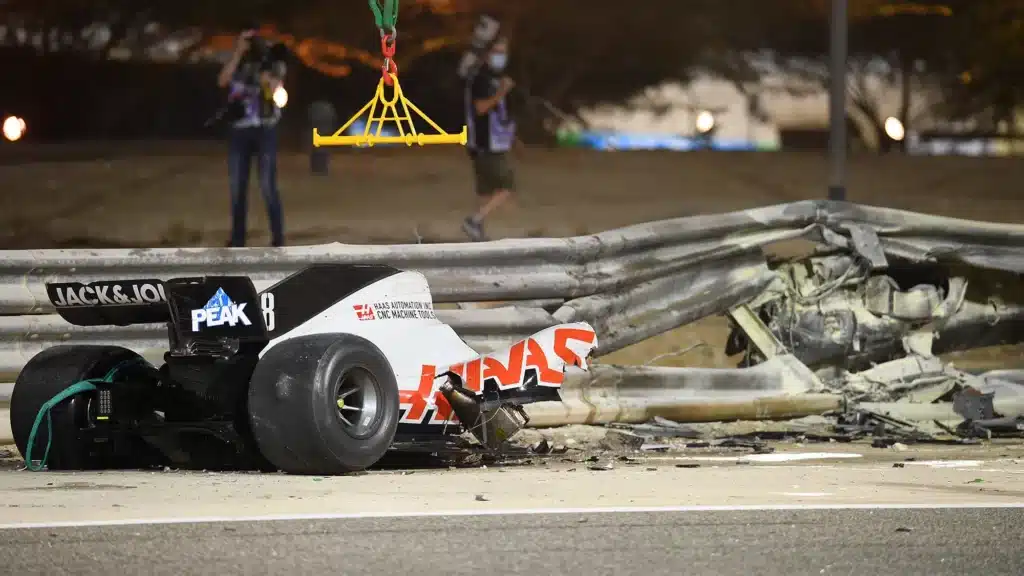
Romain Grosjean’s fiery crash at the 2020 Bahrain Grand Prix would have certainly resulted in severe injuries, if not death, had the Halo system not been there. Here’s a video of it.
During the race, Grosjean’s car was hit by Daniil Kvyat’s car, sending Grosjean head-on into the barriers. The impact split the crash barrier and sent the car in-between the barriers, which shaved off the back of the car from the safety cell.
The key is that the Halo deflected the barrier completely as it scraped against the upper portion of the car, protecting Grosjean’s head from the impact.
This accident was eerily similar to that of Helmuth Koinigg in 1974, when the driver was decapitated by the barrier.
3. Max Verstappen & Lewis Hamilton Crash in 2021
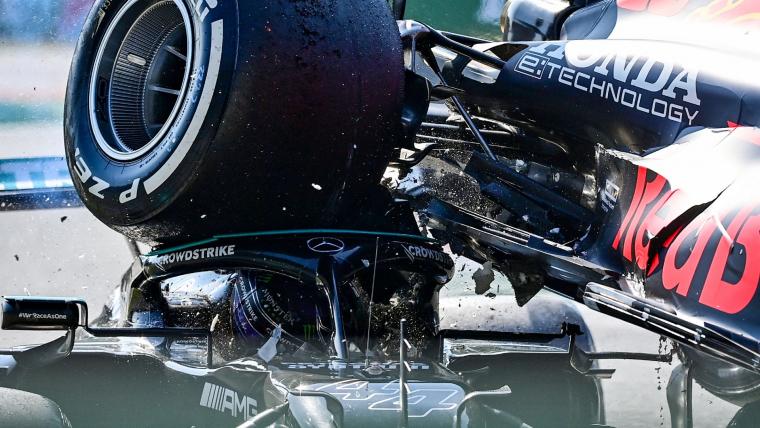
During the 2021 Italian Grand Prix at Monda Lewis Hamilton and Max Verstappen collided, with Verstappen’s car being lifted up from the ground and thrown on top of Hamilton’s car.
The car’s rear wheel landed right on top of Hamilton’s Mercedes, on the Halo system, which fully protected his head from the impact.
After the accident, Hamilton said that it “saved my neck”, referring to the Halo system. Without it, the wheel would have struck Hamilton’s head, possibly causing deadly injuries.
And here’s a video that shows it all!
4. Zhou Guanyu Crash in 2022
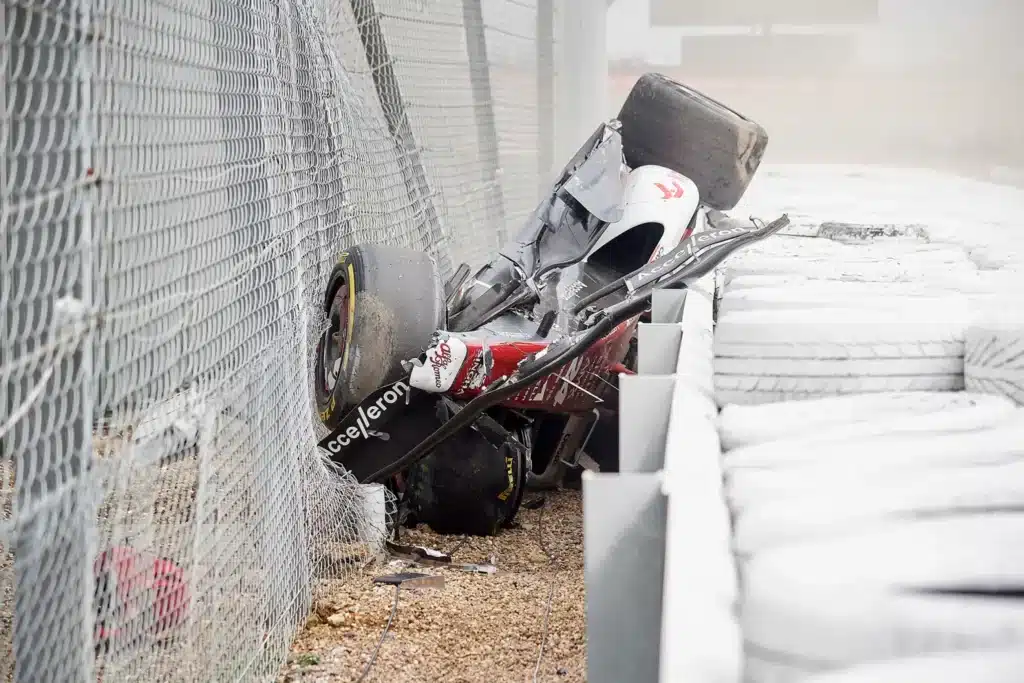
During the 2022 British Grand Prix, Zhou Guanyu’s car flipped over and skidded over to the tyre barrier, crashing into it.
It’s clear from the images above that the Halo saved Guanyu’s life by protecting his head when the car flipped over.
Even during the crash into the tyre barriers, the Halo served as vital protection for the driver, preventing any serious injuries. Here’s a video that shows what happened exactly.
To Conclude…
The Halo protection system has been a much-needed addition to Formula 1. Its role in keeping the driver safe from serious head injuries can’t be overstated.
Alongside the HANS safety device, survival cell, fire-resistant suits, and all the other security elements, it makes Formula 1 a safer sport.
Truly, it has become an indispensable safety element that will keep improving and keeping drivers safe!